
Best Tractors to Consider for Small Farms
When people talk about tractors, the conversation usually drifts toward horsepower numbers and brand names. But on a small farm, that way of thinking doesn’t help much. What really matters is whether the tractor feels comfortable in your field, whether it turns easily and whether it burns more fuel than the work justifies.
Most small farmers figure this out only after a few seasons. A tractor that looks impressive on paper can become tiring to use if it’s too big, too heavy or simply unnecessary for the size of land involved.
On farms under five acres, tractors rarely pull heavy loads all day. They spray, cultivate, haul small trailers and move between tight rows. That’s why tractors in the 15–30 HP range usually make the most sense. They’re easier to manage and cheaper to live with.
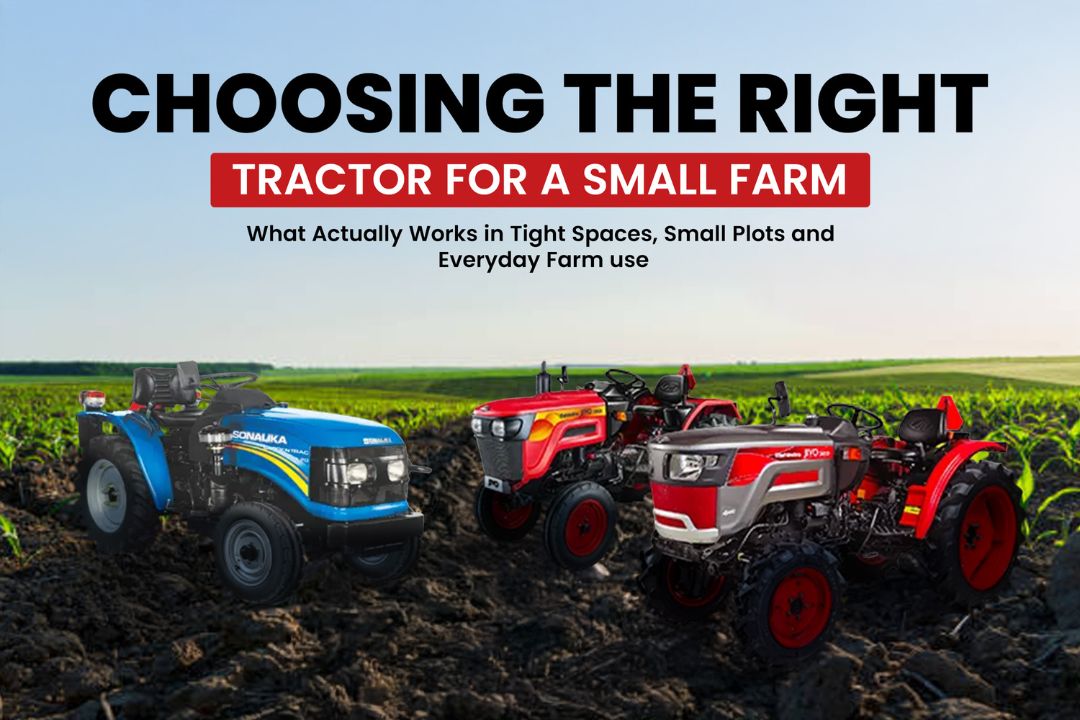
One name that comes up again and again in this space is Mahindra. The Jivo series, especially models around 20–26 HP, is common on small farms for a simple reason that it works perfectly for small farms. It doesn’t feel oversized in orchards and it doesn’t struggle with everyday work either. Farmers who deal with loose soil or wet patches also like having the option of 4WD, which the Jivo offers without going into large-tractor territory.
At the other end of the scale is the Swaraj Code. This one surprises people when they first see it. At just over 11 HP, it might not seem that powerful, but for gardens, nurseries and very small plots, it does exactly what it’s meant to do. It’s easy to manoeuvre, doesn’t disturb crops and replaces a lot of manual work.
Then there are farmers who just want something simple and affordable. No extra features, no complicated electronics. For them, tractors like the Sonalika GT 20 RX often make sense. It sits comfortably around 20 HP and handles routine work without demanding much attention. It’s not trying to be premium. It’s trying to be usable and many farmers appreciate that.
Some small farms, however, aren’t really “light work” farms. Longer hours, slightly heavier implements, or frequent transport work change the equation. That’s where tractors like the John Deere 3028 EN enter the picture. At around 28 HP, it’s still compact, but it feels stronger and more planted. It costs more but farmers who choose it usually know why they’re paying extra.
Another thing that trips people up is the 2WD vs 4WD decision. On flat, dry land, 2WD works fine. Plenty of farmers run it for years without issues. But in orchards, sloping fields, or wet soil, 4WD quietly makes life easier. It’s one of those things you don’t miss until you need it.
In reality, there is no single best tractor for small farms. What works in one village may not work in another. Dealer support, spare parts availability and even which mechanic you trust nearby often matter more than specifications.
Most experienced farmers will tell you this: if a tractor feels easy to use from the first week, you probably made the right choice. If it feels awkward or excessive, no amount of horsepower will fix that.
MotorFloor takeaway: On small farms, the best tractor isn’t the strongest one. It’s the one that quietly fits into your workday without demanding attention.

MotorFloor
Articles: 33Related Posts
Best Tractor Practices for Small-Land Farmers in India
When Is the Right Time to Buy a Tractor: Astrology Secrets Revealed
Common Tractor Problems During Indian Summers & How to Prevent Them
How to Change a Tyre Puncture on a Tractor: A Step-by-Step Guide
Best Tractor Settings for Paddy, Sugarcane, Wheat & Cotton Farming