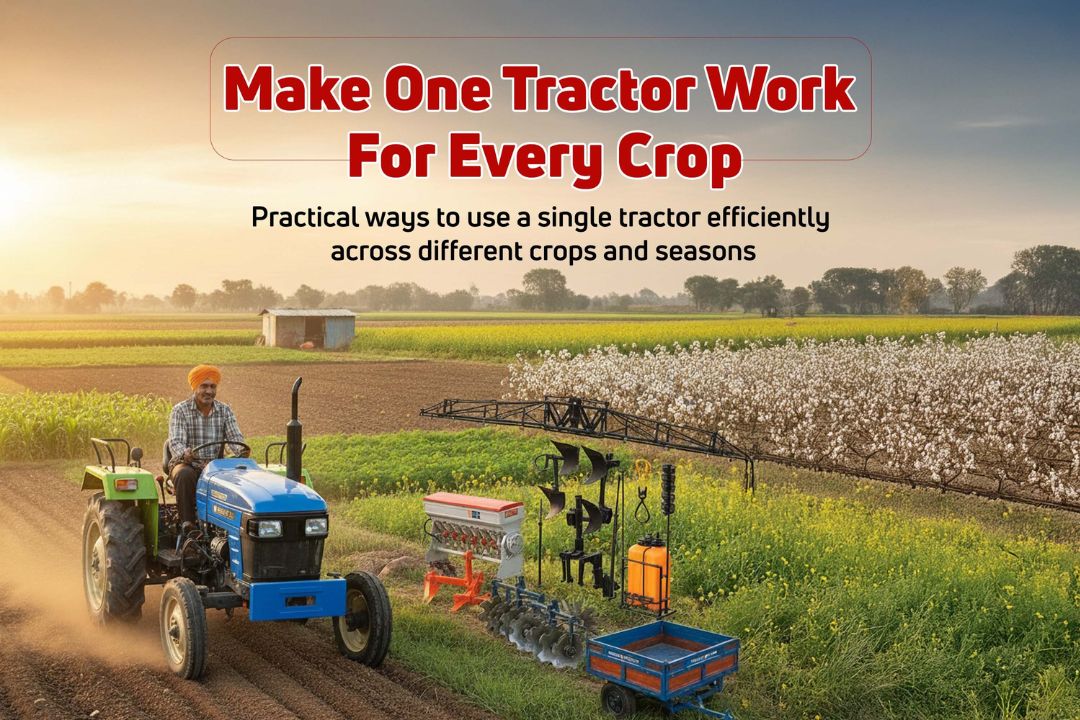

Using Tractors Efficiently for Multi-Crop Farming: Tips from Indian Farms
On many Indian farms today, the crop calendar rarely stays fixed. One year it’s maize after cotton. Another year pulses replace oilseeds. Sometimes vegetables get added because prices look better. Multi-crop farming isn’t really a strategy anymore, it’s just how farmers adapt.
What usually stays the same, though, is the tractor. Most farms don’t have the luxury of owning different machines for different crops. One tractor has to handle everything. And in practice, that’s possible, but only if it’s used with a bit of planning.
Farmers who manage this well don’t rely on horsepower alone. They rely on adjustable implements. Multi-crop planters and flexible seed drills are the real workhorses here. With small changes in spacing, depth and metering plates, the same setup can move from maize to pulses to oilseeds without changing the tractor or losing time.
Speed matters too, not top speed, but steady speed. Farmers often say that when the tractor pulls smoothly and doesn’t surge or slow down, the crop stand looks better later. Uneven speed shows up weeks later as uneven germination. That’s something people learn only after seeing it happen a few times.
Another thing that comes up often is passes. Earlier, separate passes were normal. Till, sow and then fertilise. Now, farmers try to combine as much as possible. One pass instead of three saves diesel, reduces soil compaction and finishes work before weather changes. When you’re growing more than one crop, timing becomes everything.
What many farmers admit though is that the tractor itself isn’t the problem, habits are. Using the same settings for every crop is common and costly. Seed size changes, depth needs change, spacing changes. Farmers who pause for calibration before switching crops usually see better results than those who rush.
The most efficient farms tend to have operators who understand their implements as well as their tractor. They know how hydraulics respond, how tyres behave on different fields, and when something doesn’t “feel right”. That awareness prevents breakdowns more than any manual ever will.
Multi-crop farming isn’t about adding machines. It’s about stretching one machine intelligently across seasons, crops and conditions.
Motorfloor takeaway: On Indian multi-crop farms, efficiency comes from flexibility. A single tractor used thoughtfully and adjusted often can quietly support many crops without demanding more investment.

MotorFloor
Articles: 33Related Posts

Best Tractor Practices for Small-Land Farmers in India
When Is the Right Time to Buy a Tractor: Astrology Secrets Revealed
Common Tractor Problems During Indian Summers & How to Prevent Them

How to Change a Tyre Puncture on a Tractor: A Step-by-Step Guide
Best Tractor Settings for Paddy, Sugarcane, Wheat & Cotton Farming