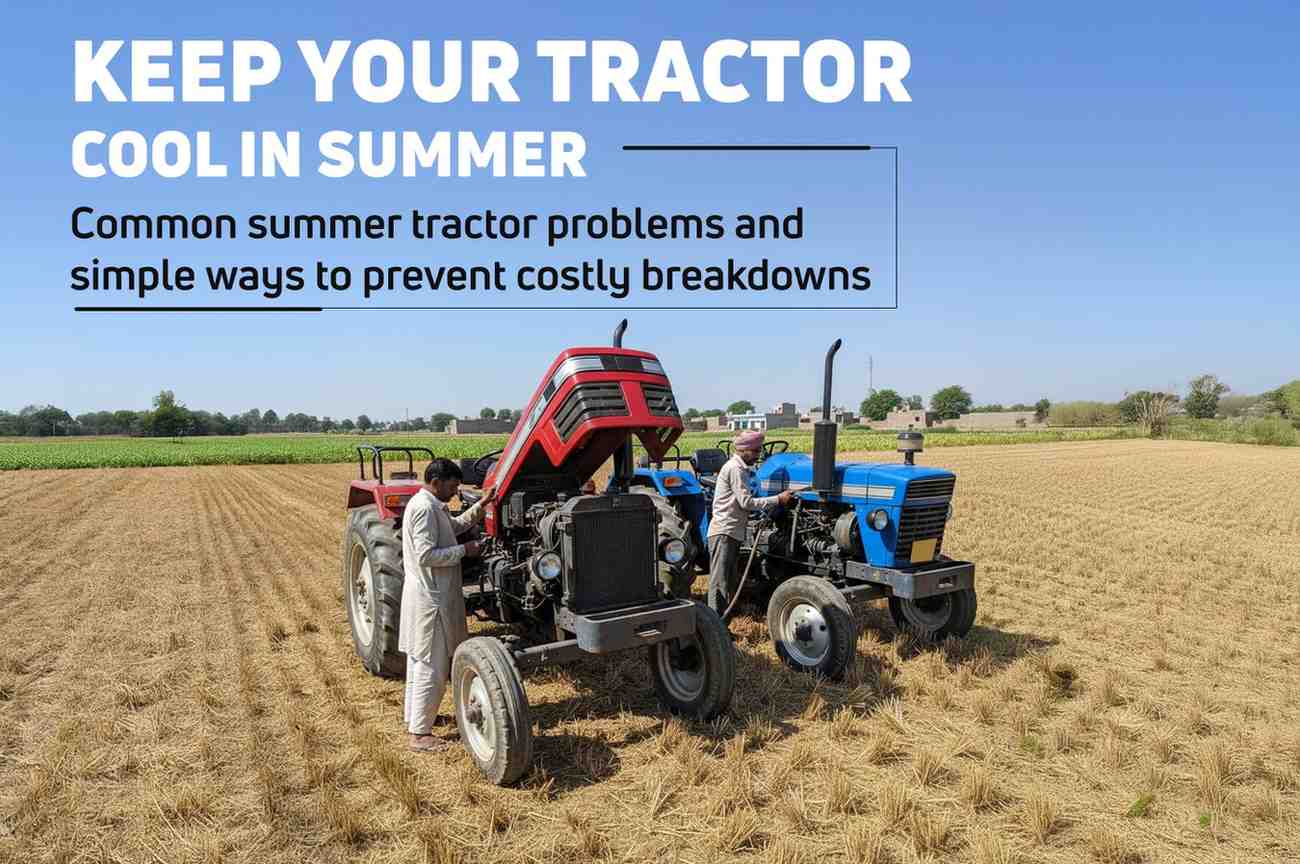

Common Tractor Problems During Indian Summers & How to Prevent Them
Indian summers are tough, not just on farmers, but on tractors too. High temperatures, dry winds, dust and long working hours put tractors under constant stress. Many problems that show up during summer aren’t sudden failures; they build up quietly and then surface when the tractor is already working hard.
The good news is that most summer-related tractor issues are preventable if you know what to watch for and when to act.
1. Engine Overheating: The Most Common Summer Issue
Overheating is the number one complaint during summer. In most cases, the engine itself isn’t the problem but the airflow is. Dry crop residue, dust and grass easily clog radiator grills, pre-screens and cooling fins. Once airflow reduces, heat has nowhere to go. Low coolant levels or an incorrect coolant mix make things worse.
How to prevent it:
- Clean radiator grills and fins frequently, sometimes daily during dusty work
- Check coolant level regularly and maintain the correct mix
- Inspect hoses for cracks or leaks
- Work early morning or late evening when possible
If overheating starts mid-work: Instead of shutting the tractor off immediately, disengage the PTO, if your tractor has air conditioning, switch it off, reduce engine RPM and keep the tractor moving slowly. Airflow through the radiator can bring temperatures down enough to reach a safe stopping point for cleaning.
2. Battery Trouble in Extreme Heat
Heat shortens battery life faster than cold. High temperatures cause faster evaporation of electrolyte fluid and weaken internal components. Batteries may appear fine one day and fail the next.
How to prevent it:
- Clean battery terminals to avoid resistance
- Check fluid levels in non-sealed batteries
- Make sure the battery is firmly mounted
- If the tractor is idle for long periods, keep the battery charged
3. Hydraulic and Engine Oil Breakdown
Oil doesn’t behave the same way in extreme heat. Hydraulic fluid and engine oil thin out, reducing lubrication and increasing wear on pumps, valves and engine parts.
How to prevent it:
- Check oil and hydraulic levels daily
- Follow shorter oil change intervals during peak summer use
- Use only manufacturer-recommended fluids
- Grease all lubrication points regularly
4. Tyre Failures and Blowouts
Hot air expands. Combine that with heavy loads and long runs on hard surfaces, and tyres are under serious pressure. Overinflation and worn tyres are common causes of summer blowouts.
How to prevent it:
- Check tyre pressure when tyres are cool
- Follow recommended pressure, especially for loaded work
- Inspect tyres for cracks, cuts, or uneven wear
- Avoid long runs on hot tarmac under full load
5. Dust-Clogged Air and Fuel Systems
Summer fieldwork kicks up fine dust that slowly chokes air filters and pre-cleaners. Reduced airflow means poor combustion, power loss and extra strain on the engine.
How to prevent it:
- Clean air filters and pre-cleaners frequently
- Replace fuel and oil filters as needed
- Keep the engine bay reasonably clean
6. Electrical Issues from Heat and Vibration
Loose connections expand and contract with heat. Combined with vibration, this can lead to shorts, sensor issues or sudden electrical failures.
How to prevent it:
- Inspect wiring and connectors regularly
- Tighten loose terminals
- Use dielectric grease on exposed electrical points
General Summer Care That Makes a Big Difference
- Do quick daily checks before starting work
- Wash off dust, mud and crop residue regularly
- Park in shade whenever possible
- Follow greasing schedules strictly
Indian summers don’t have to mean constant breakdowns. Most problems give warnings like rising temperature, weak starts and sluggish hydraulics. Catching them early keeps the tractor running when it’s needed most.
Motorfloor takeaway: Summer doesn’t damage tractors but neglect does. A few extra minutes of daily checks can save hours of downtime in peak season.

MotorFloor
Articles: 33Related Posts

Best Tractor Practices for Small-Land Farmers in India

When Is the Right Time to Buy a Tractor: Astrology Secrets Revealed
How to Change a Tyre Puncture on a Tractor: A Step-by-Step Guide
Best Tractor Settings for Paddy, Sugarcane, Wheat & Cotton Farming

Top Mistakes Farmers Make While Buying a Tractor & How to Avoid Them