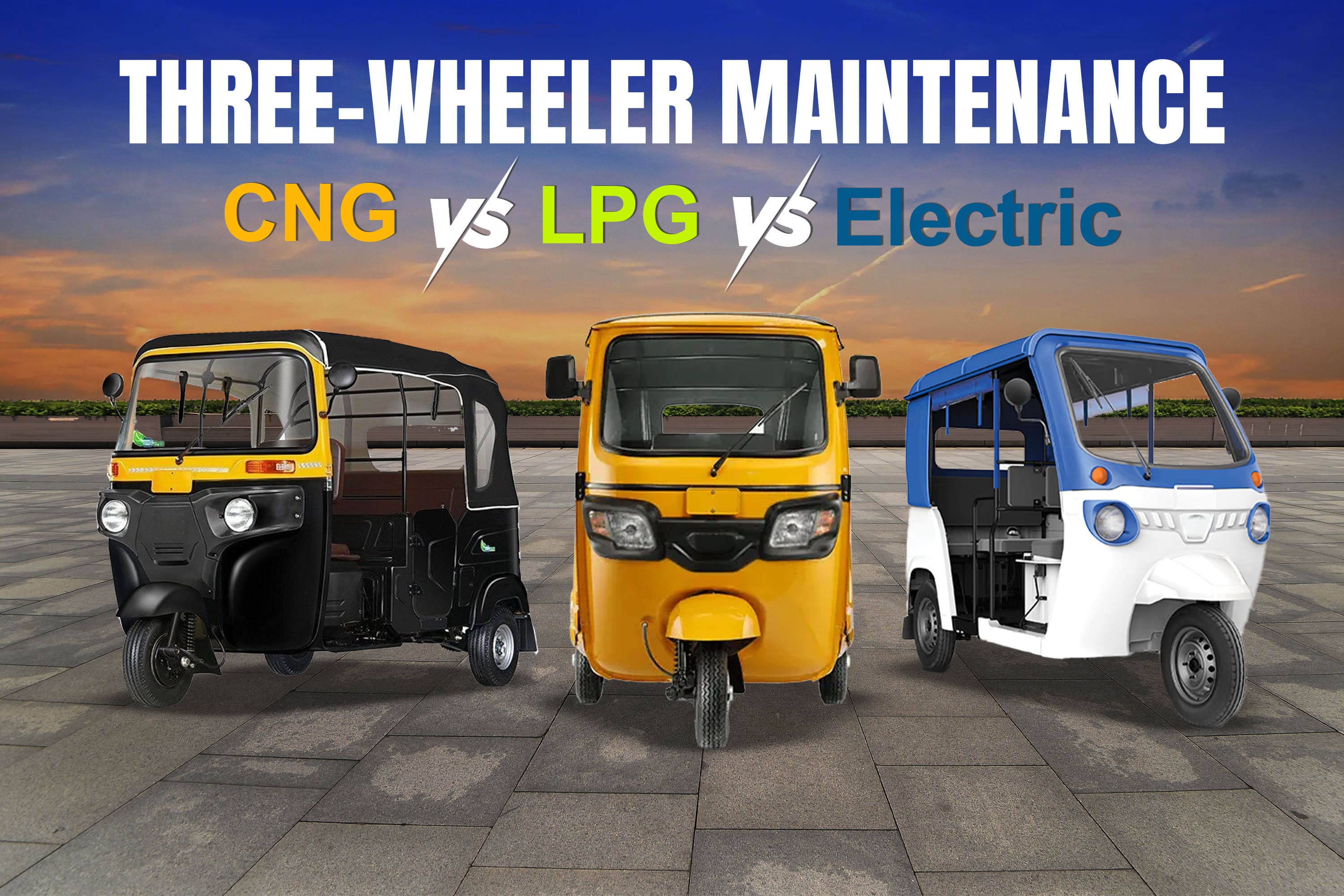

CNG, LPG or Electric Three-Wheelers: Maintenance Differences Explained
Three-wheers are an important part of transport in both urban and semi-urban areas. Purchasers compare CNG three-wheers with LPG three-wheers or electric three-wheers on the basis of fuel cost. However, it is a different story when it comes to their maintenance. Every three-wheer has a different type of maintenance with a different cost associated with it.
CNG Three-Wheelers: Well Structured but Needs Attention
Three-wheelers with CNG motors involve internal combustion engines with a natural gas compression system. Maintenance of these vehicles has been more or less the same as when using gasoline cars, with some additional checks on the gas system.Oil changes remain basic when it comes to engine maintenance.
The CNG kit requires periodic leakage tests. The CNG cylinders require hydro-testing. The injectors or regulators may clog if impurities are present in the gas. Cooling requires special care. CNG engines tend to run hotter. Though spare parts are readily available in the market, the maintenance interval remains high. Even if the maintenance tests are overlooked, it increases downtime.
LPG Three-Wheelers: Simpler Fuel System, Moderate Wear
In LPG three-whealers, the fuel system is less complex compared to CNG three-whealers. The combustion of the fuel is cleaner compared to petrol but marginally dirtier compared to CNG. Engines require oil changes more often. Rubber materials like hoses and seals have a reduced life due to the dry characteristic of LPG.
Vaporisers and mixers must also be cleaned to ensure efficiency. As opposed to CNG, there’s no need for high pressure testing in the case of an LPG tank. But tuning remains to be an important factor to prevent power losses. There’s still moderate levels of maintenance to be made, considering both conventional ICE maintenance and fuel checks.
Electrical Three-Wheeler: Less Parts With Normal Maintenance
Electric three-wheers are a complete changeover when it comes to maintenance. There are no engines, clutches, gearboxes, and exhaust systems for maintenance. Maintenance for electric three-wheers entails the inspection of the motor bearings, controllers, wires, and connectors.
Battery management determines maintenance costs and planning. Lithium-ion batteries require little day-to-day care, while charging habits are greatly important. Lead batteries require frequent topping off of water, along with replacement at a relatively earlier stage of battery life. Braking distances are reduced because of regenerative brakes in some models. Software diagnosis does away with tuning, hence reducing visits to the workshop.
Comparison of Costs, Skills, and Service Access
CNG and LPG three-wheelers operate through simple mechanics; hence, accessibility to service points remains broad for such vehicles. The electric three-wheels require expertise and equipment for repair and mechanics that are limited in many places. But fewer points of potential failure enhance reliability. Eventually, electric three-wheels have low maintenance costs as opposed to CNG and LPG autos.
Final Perspective
Maintenance differences are not just based on fuel types, but on design. CNG needs “discipline,” LPG “balance,” while “electric” requires “electrical knowledge.” Operators will benefit most “if maintenance planning correlates with usage.”
For more updates, industry news, and expert perspectives on commercial vehicles, stay tuned to MotorFloor, your trusted source for comprehensive coverage across the commercial mobility sector.

motorfloor
Articles: 31Related Posts
Mahindra LMML Unveils Udo: A New Electric Three-Wheeler Targeting City Commuters
Bus Stops to Doorsteps: The Hidden Role of Three-Wheelers in Daily Commutes
How Indian Three-Wheelers Compare with Global Safety Norms
Why EV Adoption Is Fastest in the Three-Wheeler Segment in India
Best Passenger Auto Rickshaw for City Use in India: Fuel Type & Models