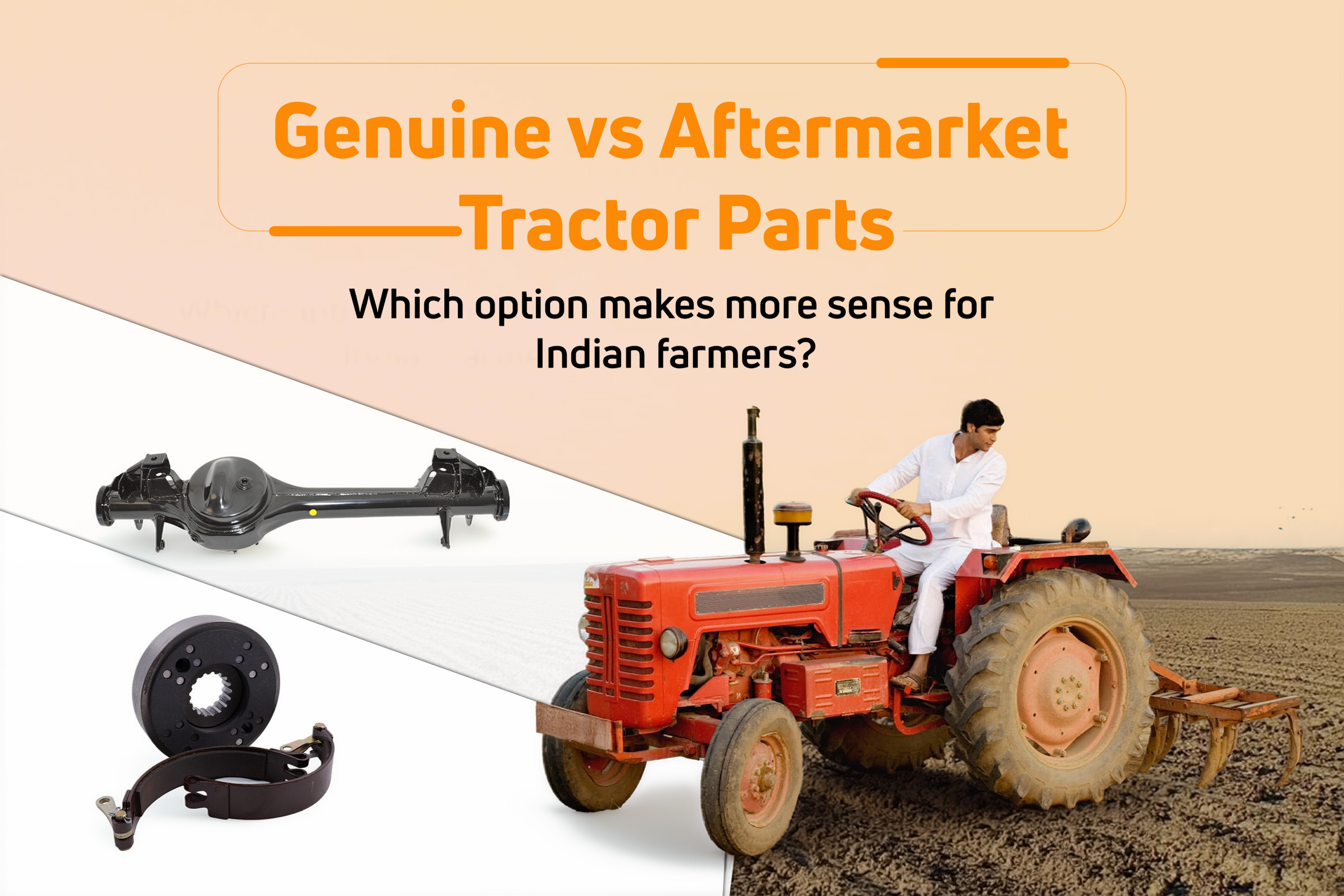

Genuine vs Aftermarket Tractor Spare Parts: What’s Better for Indian Farmers?
If you ask farmers what stresses them the most about tractor ownership, at least a few will say the same thing, which are spare parts. Not finding them on time, paying too much or worse, fitting a part that fails again after a few weeks. That’s where this constant debate starts: Should I buy genuine tractor parts, or are aftermarket ones good enough?
On paper, the choice looks simple. Genuine parts cost more. Aftermarket parts cost less. But in real Indian farming conditions dusty fields, long working hours, rushed repairs during peak season, the decision is rarely that straightforward.
What Do We Actually Mean by Genuine (OEM) Parts?
OEM means Original Equipment Manufacturer. In simple language, these are the same parts your tractor was built with at the factory. Same design, same material and same specifications. So if you’re running a John Deere tractor, OEM parts are made specifically to work with that model.
Most farmers who stick to genuine parts do so for one reason: peace of mind. You fit the part, the tractor works the way it’s supposed to and you move on with your day. No repeat breakdowns, no strange noises a week later.
Why Do Farmers Buy Aftermarket Parts?
Simple answer? Price and availability.
Aftermarket parts are made by third-party companies. They’re not tied to one tractor brand, which is why they’re cheaper and easier to find in local markets. Sometimes, when a tractor breaks down mid-season and the genuine part isn’t immediately available, an aftermarket option feels like the only practical choice.
And to be fair, some aftermarket parts do work fine. Especially for older tractors or non-critical components. The problem is consistency. One batch works well, another doesn’t. It’s a bit of a gamble.
Where the Real Difference Shows Up
The biggest difference between OEM and aftermarket parts isn’t always visible on day one. It shows up after weeks or months of use.
Genuine parts usually fit perfectly. They don’t stress nearby components, don’t vibrate unnecessarily and don’t need “jugaad” to install. Aftermarket parts, on the other hand, sometimes need small adjustments. A washer here, extra tightening there. Individually these seem minor but over time they add up.
This matters a lot when you’re dealing with engines, hydraulics, transmissions or axles. One slightly mismatched part can affect the whole system.
What About the Cost?
Yes, OEM parts are more expensive upfront. No denying that. But here’s what many farmers realise later: replacing the same aftermarket part twice or dealing with secondary damage often costs more than fitting a genuine part once. Add labour charges, lost working days, and emergency repairs, and the “cheap” option doesn’t always stay cheap. That said, not every tractor part needs to be genuine. Which brings us to the practical side of things.
When Genuine Parts Just Make Sense
If the part affects how your tractor runs, pulls, lifts or stops, go genuine. Engines, gearboxes, hydraulic pumps, brakes, this is not where experiments pay off.
OEM parts are also the safer choice for newer tractors, especially those under warranty. Using non-genuine parts can sometimes complicate warranty claims and that’s a headache no one wants.
When Aftermarket Parts Can Work
For older tractors that are already out of warranty, aftermarket parts can be reasonable for non-critical items. Body panels, lights, mirrors, guards, maybe even seats. In these cases, spending extra on OEM doesn’t always give proportional benefit.
The key is the source. A well-known aftermarket supplier is very different from a no-name part sold purely on price.
A Simple Way to Decide
Before buying any part, ask yourself one question: If this part fails again, what’s the worst that can happen?
If the answer is “tractor won’t work and my fieldwork stops,” go OEM.
If the answer is “annoying, but manageable,” the aftermarket might be fine.
That one question solves most confusion.
Final Thoughts
There’s no universal rule that says only genuine parts or never aftermarket ones. Indian farmers are practical, and their choices usually reflect that.
Still, when it comes to reliability, safety and long-term performance, genuine tractor parts win more often than not. They reduce repeat repairs, protect other components and keep your tractor doing what it’s meant to do.
MotorFloor takeaway: Saving money matters. But saving time, crops and mental stress matters more. Choose parts like you choose tools, based on trust, not just price.

MotorFloor
Articles: 33Related Posts
Best Tractor Practices for Small-Land Farmers in India
When Is the Right Time to Buy a Tractor: Astrology Secrets Revealed
Common Tractor Problems During Indian Summers & How to Prevent Them
How to Change a Tyre Puncture on a Tractor: A Step-by-Step Guide

Best Tractor Settings for Paddy, Sugarcane, Wheat & Cotton Farming