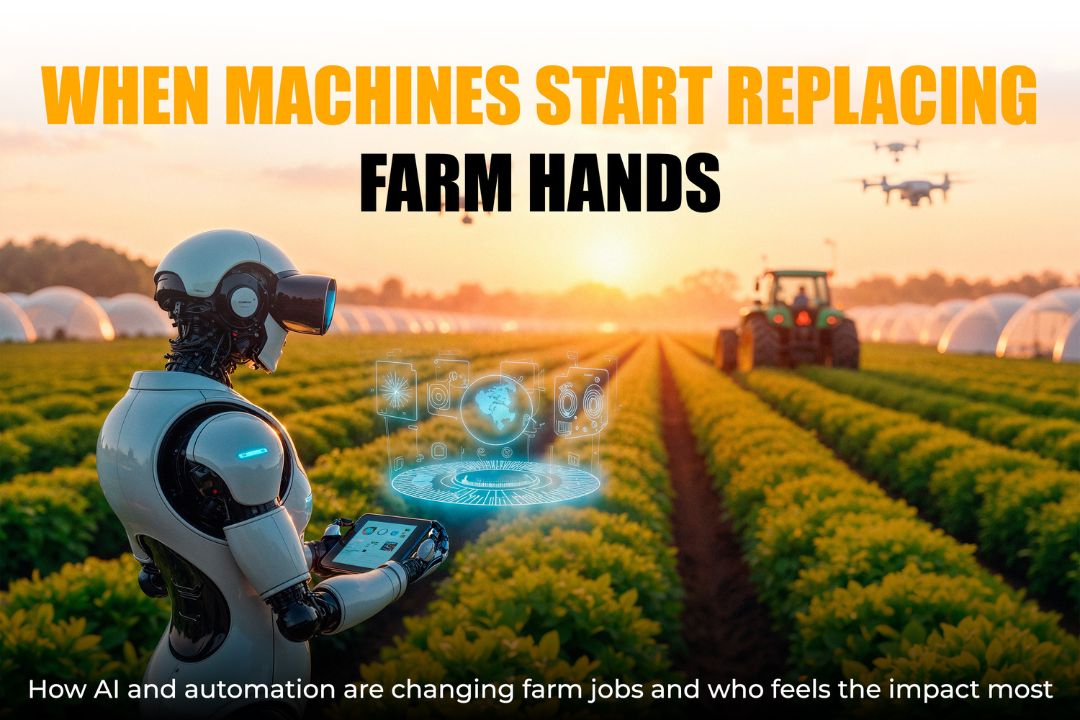

How AI and Automation Are Posing a Risk to Farm Employment
A few years ago, if someone said robots would be working on farms, most people pictured science fiction. Today, it’s not fiction at all. It’s happening quietly, sometimes without farmers even realizing how much work is being shifted from people to machines.
That’s where the worry starts. Farming has always changed with technology, sure. Tractors replaced animals, harvesters replaced manual cutting. But AI and automation feel different. They don’t just make work easier, they sometimes remove the need for workers altogether.
Why This Shift Feels Uncomfortable
What’s unsettling isn’t one machine doing one job. It’s the combination of things happening at once. Tractors that steer themselves. Drones that scan fields faster than a team of workers ever could. Sensors that decide when to irrigate, fertilize or spray, without asking anyone.
In livestock farming, this goes even further. Machines can track animal movement, feeding habits and health signs all day. Some dairies now run with minimal human involvement. Once systems like these are installed, the number of people needed drops, sometimes sharply.
Which Farm Jobs Are Most Exposed
Let’s be honest. Jobs that involve repeating the same task every day are the first to feel the pressure. Walking fields to check crop health, manual spraying and irrigation monitoring. Even basic machinery operation.
On large farms, one skilled operator with automated equipment can now do what used to take several workers. Seasonal labour, especially, becomes easier to replace when machines can work longer hours without breaks.
Livestock jobs are changing too. When machines handle milking or health monitoring, fewer hands are needed in sheds. The work doesn’t vanish overnight, but it slowly shrinks.
But It’s Not All Job Loss
At the same time automation is spreading, many farms are already short of workers. Younger people aren’t lining up for physically demanding farm jobs. Older workers are retiring. In some regions, farms struggle to find labour even before machines arrive.
So in practice, automation sometimes fills gaps rather than replacing people who are ready and waiting. It’s not always about cutting jobs, it’s about keeping operations running.
The Real Problem No One Likes Talking About
The biggest danger isn’t robots taking all jobs. It’s that some workers get left behind. Farms now need people who can handle software, interpret data, maintain automated systems and troubleshoot when things go wrong. Workers who only know manual tasks may find fewer opportunities, even though new roles exist.
This creates an uneven situation. Jobs change, but not everyone gets the chance to change with them.
So Where Does This Leave Farm Employment?
Automation isn’t ending agriculture. Farms will still need people, just not always for the same work. Physical labour reduces, technical roles increase and the gap between skilled and unskilled workers grows wider. That transition is where the real risk lies.
Motorfloor takeaway: AI and automation don’t wipe out farm jobs overnight. They chip away at some, reshape others and reward those who adapt early. The future of farm employment depends less on machines and more on how people keep up with them.

MotorFloor
Articles: 33Related Posts
Best Tractor Practices for Small-Land Farmers in India
When Is the Right Time to Buy a Tractor: Astrology Secrets Revealed
Common Tractor Problems During Indian Summers & How to Prevent Them
How to Change a Tyre Puncture on a Tractor: A Step-by-Step Guide
Best Tractor Settings for Paddy, Sugarcane, Wheat & Cotton Farming