
School Bus Buying Guide: Safety, Seating & Compliance in India
In India, purchasing a school bus is not exactly the simplest task. Safety, capacity, and legal requirements thus play an important role in all decisions. A school bus, carrying children every day, thus calls for reliability, security, and safety. When choosing school buses for institutions, all factors, including requirements, must be considered.
Critical Safety Features
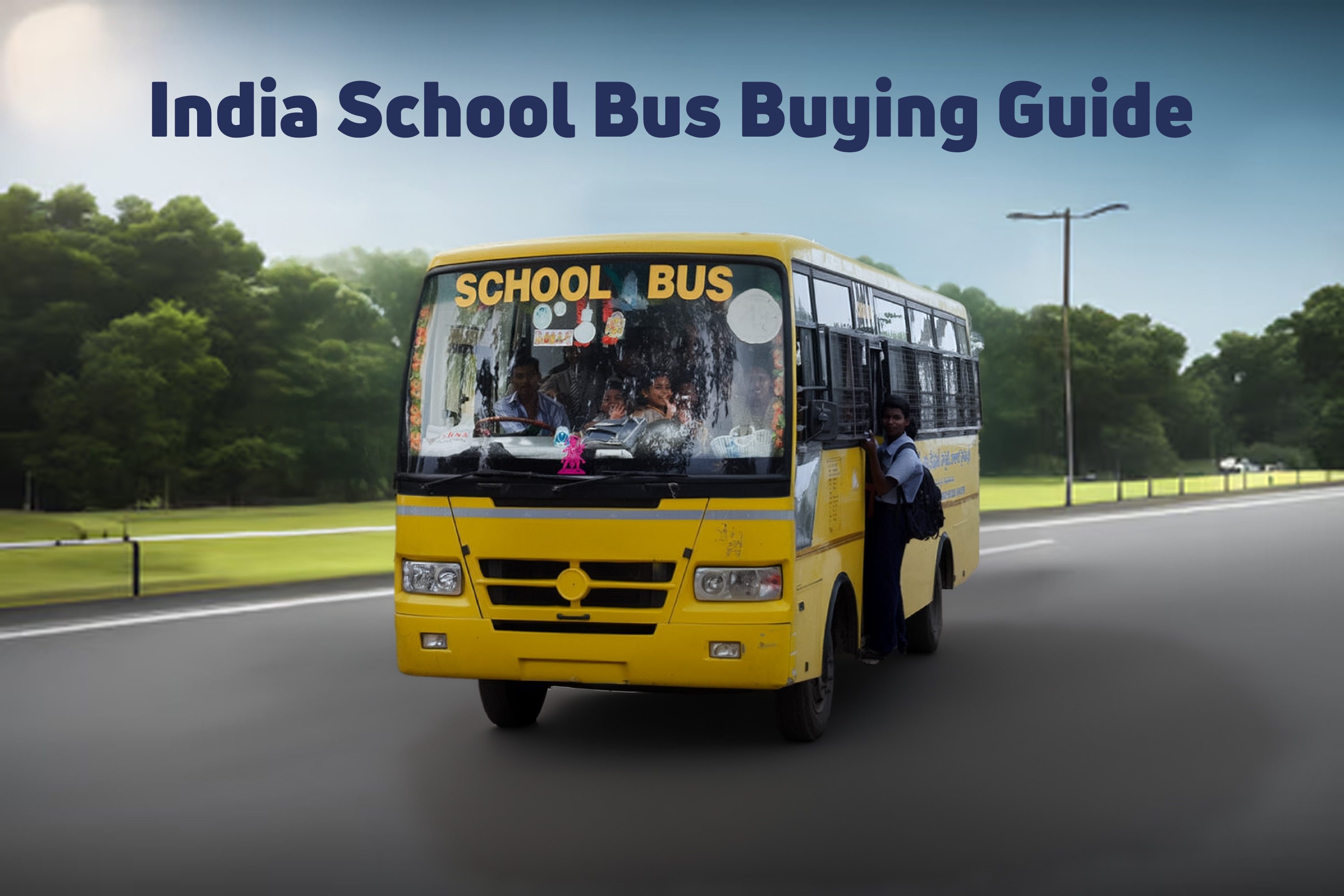
Safety begins with the design of the bus body. In India, there are set regulations, namely AIS 052, under which school bus bodies should be constructed. School buses should always be painted yellow and have ‘School Bus’ written on them.
Inside the bus, safety features include antiskid flooring, padding, and handrails to minimize the possibility of injury. Emergency exits must be accessible and marked, and fire extinguishers and first-aid kits must be provided. Stop signal arms and alarm systems for boarding and alighting safely are mandatory in most states.
Now, technology is also used for safety. The GPS device provided is AIS-140 compliant and enables real-time tracking. The use of CCTV cameras also enhances safety and security. Speed governors have been made mandatory, and their maximum speed is decided by the state transport authorities.
Seating Arrangement and Capacity
Seating conditions impact comfort as well as safety measures. In most Indian schools, the school buses have forward-facing seats, and there is adequate space for easy movement. Sharp corners and metal parts should never be preferred. The seats should be designed for the age group of the pupils.
Capacity is dependent on the route and the number of students. Mini school buses may carry 16 to 30 children, while the normal bus may hold 40 to 50 children.
If the bus is overloaded, the danger of accidents is heightened, and supervision is low. Some schools opt for fewer children in each row that will have access to the aisle.
An attendant position provided close to the entrance is important for effective supervision when the bus stops.
Seat belts must be worn by drivers and attendants. Student seat belts are mandatory in some states. The design of seat belts must be checked in local circulars.
Legal and Operational Compliance
In India, compliance is much more than physical regulations. There has to be “School bus use” specifically recorded during the time of registration, and the fitness and insurance papers have to be valid. Standards have been laid down both through the Motor Vehicles Act and the Supreme Court directions on safety standards for ambulances.
The drivers must have valid licenses, experience, and background screening as required by the state norms. The requirement for uniforms and ID cards for drivers and attendants also varies from state to state. It is important to provide access to the maintenance team because the buses must be in running condition to remain functional.
Selecting the Appropriate Type of Bus
Generally, Indian schools have options in choosing among these three types:
- Mini Buses (16-30 seats): Best used in areas having tight roads.
- Standard Buses (seating capacity 40-50): These buses are most appropriate for urban routes
- Luxury Buses with Air Suspension: These buses are used in some private schools, but maintenance costs are higher.
In a bus selection process, factors such as price, capacity, security, and regulatory considerations come into play. While affordability should not be a priority for schools while selecting a bus.
Effective Purchase Decision-Making
A school bus is a defined asset in India. When purchasing a school bus, one has to focus on aspects like safety, logical seating, compatibility, and functionality. In that case, the school bus will continue to be reliable, safe, and legal.
For more updates, industry news, and expert perspectives on commercial vehicles, stay tuned to MotorFloor, your trusted source for comprehensive coverage across the commercial mobility sector.

motorfloor
Articles: 31Related Posts
Leafy Bus to Establish Private Bus Terminals Across India
Big Shift in Urban Mobility: India Mandates Low-Floor Buses for All City Transit from October’26
Preventive Maintenance Tips for Private & State Transport Bus Fleets

What to Look for When Buying a Used Bus in India
BMTC Introduces New Metro Feeder and City Bus Routes