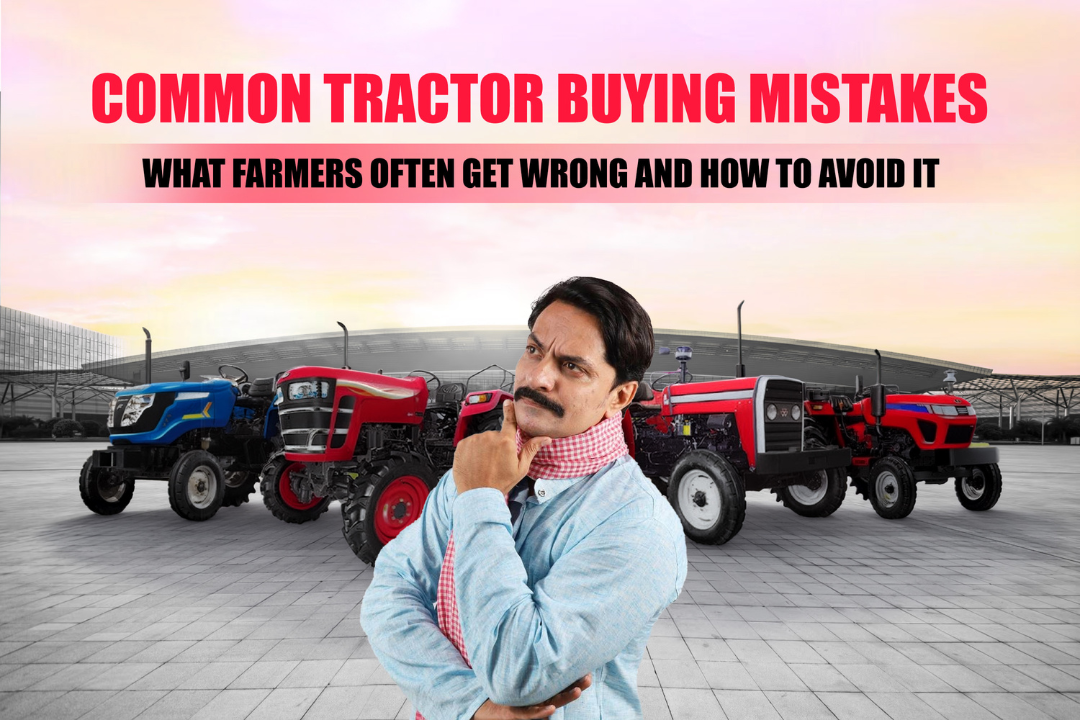

Top Mistakes Farmers Make While Buying a Tractor & How to Avoid Them
Buying a tractor is exciting. It’s also one of those decisions that looks simple at first and then slowly gets complicated. Most farmers don’t buy tractors every year, so when the time comes, there’s pressure to “just get it done.” That’s where mistakes creep in.
Many buying errors aren’t about brands or prices, they’re about mismatches. Mismatch between tractor size and work, attachments and power, expectations and reality. Let’s walk through the most common mistakes farmers make while buying a tractor and how to avoid asking yourself later, “Why didn’t I think of that earlier?”
Mistake 1: Buying a Tractor That’s Too Small
Sub-compact and small tractors look attractive. They’re cheaper, easier to handle, and seem perfect until you actually start working. If you’re planning to brush hog large fields, clear land or run heavy implements, a small tractor will feel underpowered very quickly. What looks manageable on paper turns into long, uncomfortable hours in the field.
Another thing many buyers don’t realise: features like cabs consume power. Running an air conditioner can take away 5–10 horsepower. On a small tractor, that loss is noticeable, especially on slopes or during heavy work.
How to avoid it: Be honest about your workload. If your tasks are demanding, step up in size. In most real-world cases, farmers end up happier buying as large a tractor as their budget and land realistically allow.
Mistake 2: Assuming Cab Tractors Work Everywhere
In open fields during summer, a cab is a blessing. But take that same tractor into wooded areas, and things change fast. Low-hanging branches and cab glass don’t mix well. One tap from a limb can turn into a loud, expensive lesson you won’t forget.
Cab repairs aren’t cheap, and glass doesn’t forgive mistakes.
How to avoid it: If you’ll be working in wooded or overgrown areas, plan ahead. Trim low branches before entering, or use tools like pole saws or tree shears. And if most of your work is in tight or wooded spaces, think carefully before choosing a cab tractor at all.
Mistake 3: Overloading the Tractor with Attachments
A common example is choosing a cutter that’s too wide or too heavy. A 5-foot cutter behind a tractor that’s only comfortable with 4 feet will struggle. Power loss, poor cutting quality and unnecessary wear follow soon after.
It’s not just about width. Every cutter has ratings like how much PTO horsepower it needs and the size of material it can handle. Ignoring these numbers leads to frustration and breakdowns.
How to avoid it: Match attachments carefully. A simple rule many farmers follow: the cutter width should match the loader bucket width. Also, always check PTO horsepower requirements and material ratings before buying.
Mistake 4: Comparing Attachment Brands the Wrong Way
Most manufacturers make different grades of attachments like economy, mid-range and heavy-duty. If you compare one brand’s basic cutter with another brand’s heavy-duty model, you’ll think one company makes far better products. In reality, you’re comparing two completely different categories.
How to avoid it: Instead of obsessing over brand comparisons, focus on specifications and use case. Even better, find a dealer you trust and work with them to choose the right attachment grade for your needs. Often, buying what your dealer supports well is the smartest move.
Mistake 5: Rushing the Decision Just to Be Done
Many buyers do some research, get overwhelmed and then just want the process to end. They ask for quick recommendations, hoping to shortcut the decision. Unfortunately, tractor purchases don’t reward haste. A rushed decision often means compromises you’ll live with for years.
How to avoid it: Slow down. Ask questions. Sit on the decision. The extra time spent thinking now can result in a tractor you’ll still be happy with a decade later. Tractor buying is frustrating, but it’s worth doing right.
Final Thoughts
Most tractor buying mistakes don’t come from lack of intelligence. They come from assumptions, pressure and incomplete thinking. Size, attachments, terrain and patience all matter more than people expect.
A tractor isn’t just a purchase, it’s a long-term relationship. If you take your time, match the machine to the work and avoid rushing, you’ll likely end up with something that serves you well for a very long time.
MotorFloor takeaway: The best tractor choice isn’t the fastest one to make, it’s the one you won’t regret every time you start the engine.

MotorFloor
Articles: 33Related Posts
Best Tractor Practices for Small-Land Farmers in India
When Is the Right Time to Buy a Tractor: Astrology Secrets Revealed
Common Tractor Problems During Indian Summers & How to Prevent Them
How to Change a Tyre Puncture on a Tractor: A Step-by-Step Guide
Best Tractor Settings for Paddy, Sugarcane, Wheat & Cotton Farming