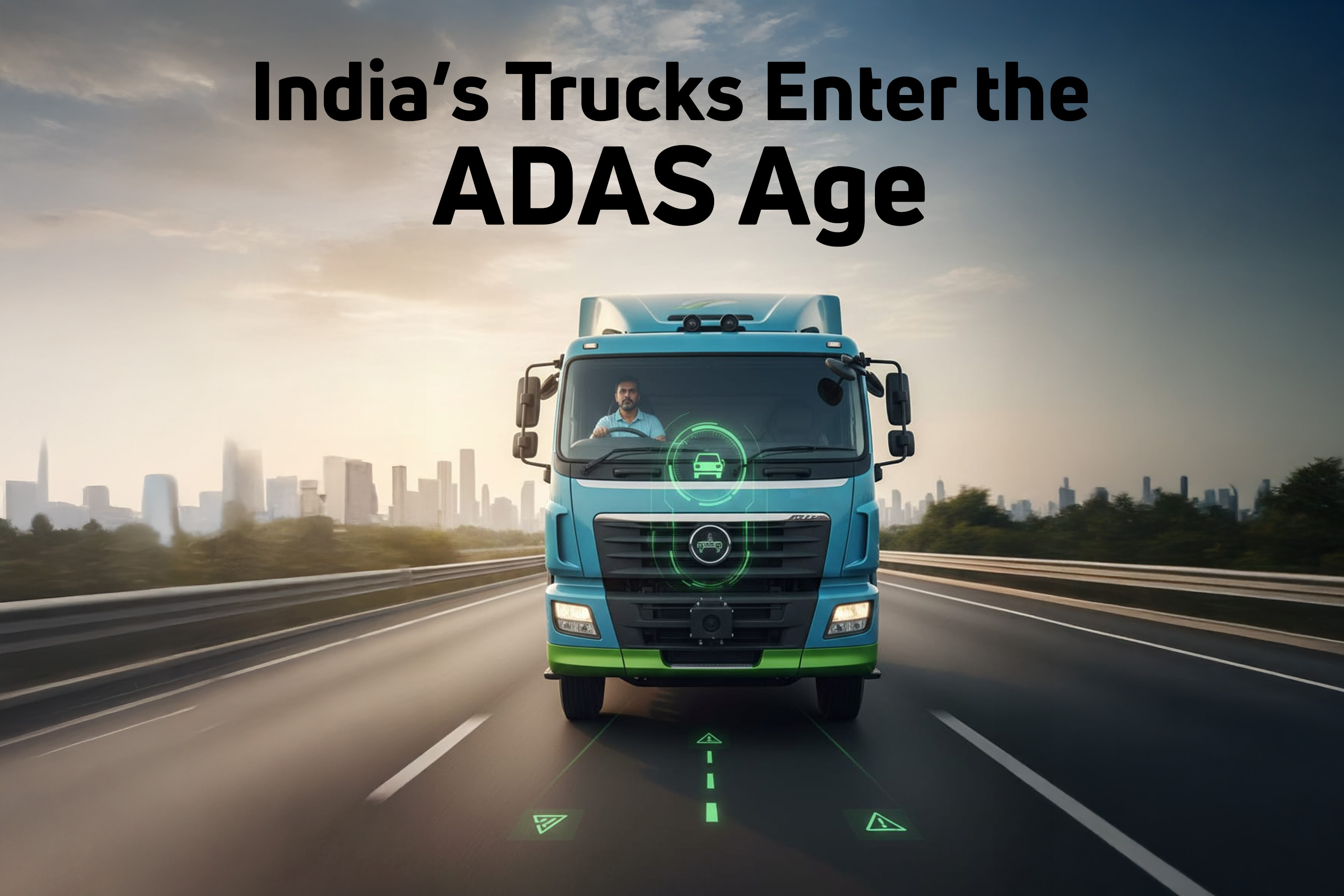

How ADAS & Driver-Assist Tech Is Entering the Indian Truck Market
Advanced Driver Assistance Systems (ADAS) and driver assistance systems are slowly turning up as a significant safety offering in the truck segment in India. These systems, intended to analyze road dynamics, warn drivers of potential threats, and aid with driver assistance, are slowly shifting from being part of the premium offering to mainstream adoption.
Real World Adoption and Key Examples
Today, in India, ADAS in commercial vehicles is a reality. Tata Motors unveiled their trucks, such as the Tata Prima line, with car-like ADAS functionalities such as collision prevention systems, lane departure warning systems, and driver monitoring systems designed for Indian road conditions.
The OEMs are also improving ADAS partnerships. Global suppliers are working with Indian CV manufacturers to enable integrated expertise in advanced ADAS with trucks, pickups, and buses in mind, and with modular software enabling over-the-air updates and the detection of various road difficulties in the form of pedestrians and three-wheelers.
In addition, there are compatible ADAS systems for heavy trucks and coaches available for SAE Level-2 vehicles, supporting the safety standards expected for commercial vehicles in India.
Challenges to Satisfaction
As ADAS in the passenger car market has achieved appreciable penetration in the Indian market, the commercial vehicle market has yet to be tapped due to cost considerations and the complex nature of traffic. The diversity of traffic conditions comprising cars, two-wheelers, and pedestrians requires a specific sensor and algorithm that is sensitive to unpredictable motion patterns and hence is less efficient for off-the-shelf ADAS technology.
Nevertheless, regulatory nudges are propelling the pace of developments. Ministry of Road Transport & Highways has announced that from late 2027, all new trucks and buses would have to be equipped with advanced driver alert systems like automatic emergency brakes, driver fatigue warnings, and lane departure warnings. It would be mandatory for newer vehicles to have ADAS systems from early 2028, and existing vehicles would also have to be fitted with ADAS systems from early 2028.
Benefit to Fleets and Drivers
From the perspective of fleet owners, ADAS provides various benefits to fleet owners in addition to improving vehicle and driver safety. Collision warnings and the use of emergency braking functions within ADAS can minimize both downtime and repair costs associated with accidents. ADAS’s driver-assist feature may contribute to increased fuel efficiency as a secondary benefit by inducing smooth driver behavior.
Conclusion
In the Indian trucking segment, ADAS and driver assistance systems are becoming increasingly applicable, shifting from a nicety consideration to a necessity. The real-world applications of the technology in the Indian market by the OEMs and tie-ups with international technology providers are largely promoting the same. ADAS could be an important innovation brought about in the Indian commercial vehicles segment due to the tangible benefits associated with the same.
For more updates, industry news, and expert perspectives on commercial vehicles, stay tuned to MotorFloor, your trusted source for comprehensive coverage across the commercial mobility sector.

motorfloor
Articles: 31Related Posts

Force Motors Continues Growth Momentum with Back-to-Back Gains in Nov–Dec 2025

GVW Explained: What It Means and Why Every Truck Buyer Should Care
Is Your Truck Trying to Warn You? Common Problems You Should Act On Fast
This Cutting-Edge Tech Is Here With a Promise to Cut Down Trucks Mishaps in India

Five Key Lessons to Learn from the World’s Most Innovative Trucking Startups