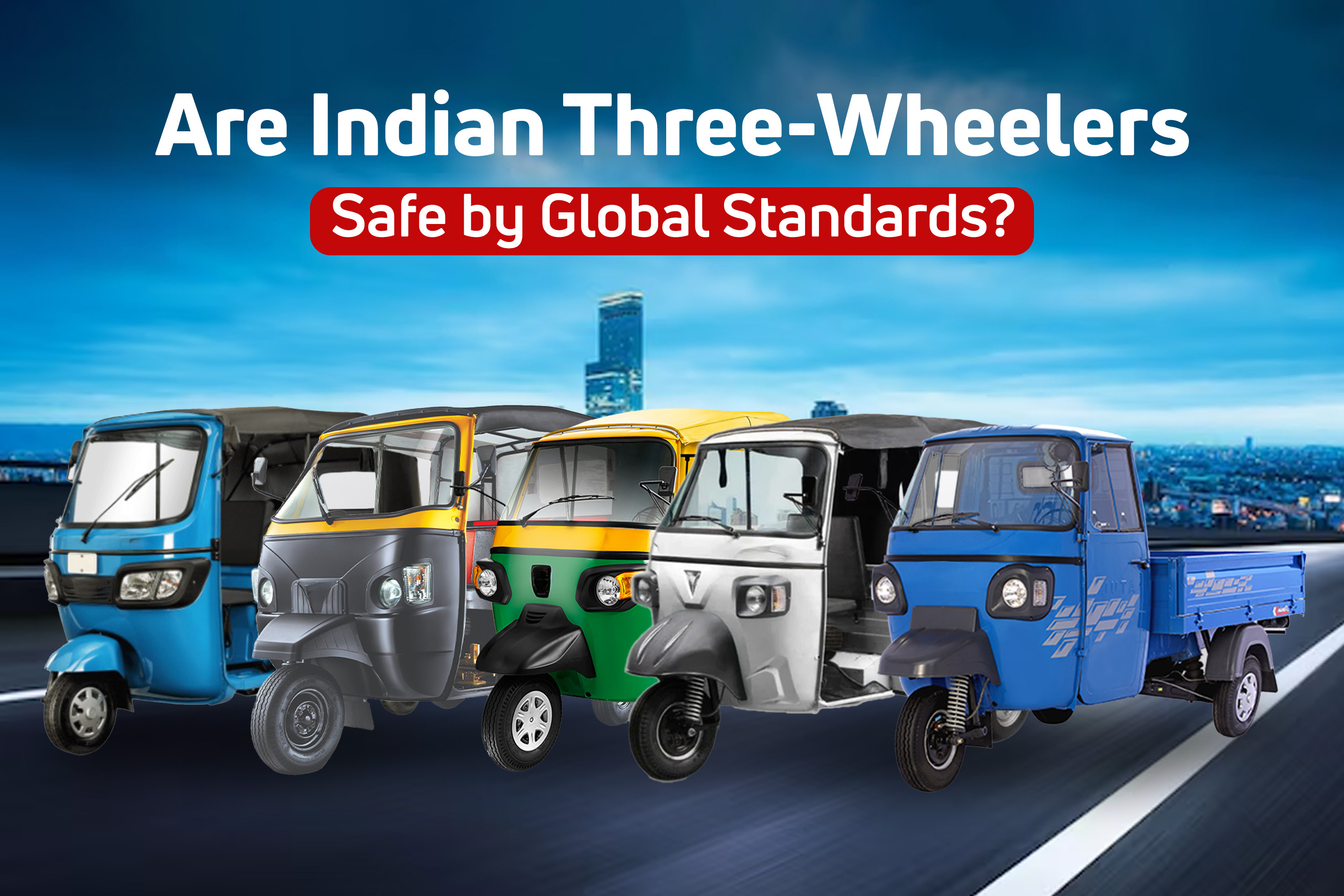

How Indian Three-Wheelers Compare with Global Safety Norms
Three wheelers are a major part of the Indian transport system. They are affordable modes of transportation for carrying people as well as light goods. Though they have gained popularity, they have been associated with safety issues. Analysis of Indian three wheelers when compared to international models reveals weaknesses that require improvement.
Existing Safety Norms in India
The three-wheelers of India are an essential transport service in the country. Organizations such as ARAI ensure the structural integrity, braking, lighting, and emissions of the three-wheelers are satisfactory. The current norms have also included safety specifications such as crash-worthiness and the safety of the driver. But aspects such as side impacts, in terms of safety, and electronic stability control, in terms of safety, are not included in the norms in Indian three-wheelers.
Comparison with Global Norms
Worldwide, safety standards address the safety of passengers, stability, and collision protection. In the European and Japanese markets, strict safety standards include collision testing, rollover testing, and reinforced cabins. Seats with safety belts for all passengers and damped steering response are mandatory. In three-wheelers worldwide, stronger chassis materials with enclosed cabins project improved safety standards. In Indian designs, however, collision impact absorbency is affected due to designs emphasizing lower costs, mileage, and space-carrying capacity.
Differences between Testing and Design
Crash test procedures vary considerably. Global crash tests involve a number of high-speed crash situations. But in India, crash tests are carried out at lower speeds, with simulated traffic congestion. Lighter weight with compact size is helpful in crash-resistance in India but not in other countries. Structural reinforcement is less in evidence here due to cost concerns. This is why three-wheelers in India are suitable for local standards but not in global ratings.
Future Directions and Improvements
There is a steady alignment of Indian safety standards to globally trending safety norms. Electric three-wheelers are driving development in enhanced chassis safety and battery safety. Road safety programs promote braking systems, ergonomics for the driver, and developments to enhance safety. Though their execution differs from one manufacturer to another, huge development is visible. Indian three wheelers are on course to be safed without losing their cost-effectiveness.
Conclusion
Indian three-wheelers strike a fair balance between being affordable and safe but lack behind when it comes to meeting international safety standards. The reason for such a discrepancy can be attributable to differences in their design and testing processes. The future of Indian three-wheelers will be about bridging the gap and will experience improvements in their safety features over a period of time in order to resemble international safety standards.
For more updates, industry news, and expert perspectives on commercial vehicles, stay tuned to MotorFloor, your trusted source for comprehensive coverage across the commercial mobility sector.

motorfloor
Articles: 31Related Posts
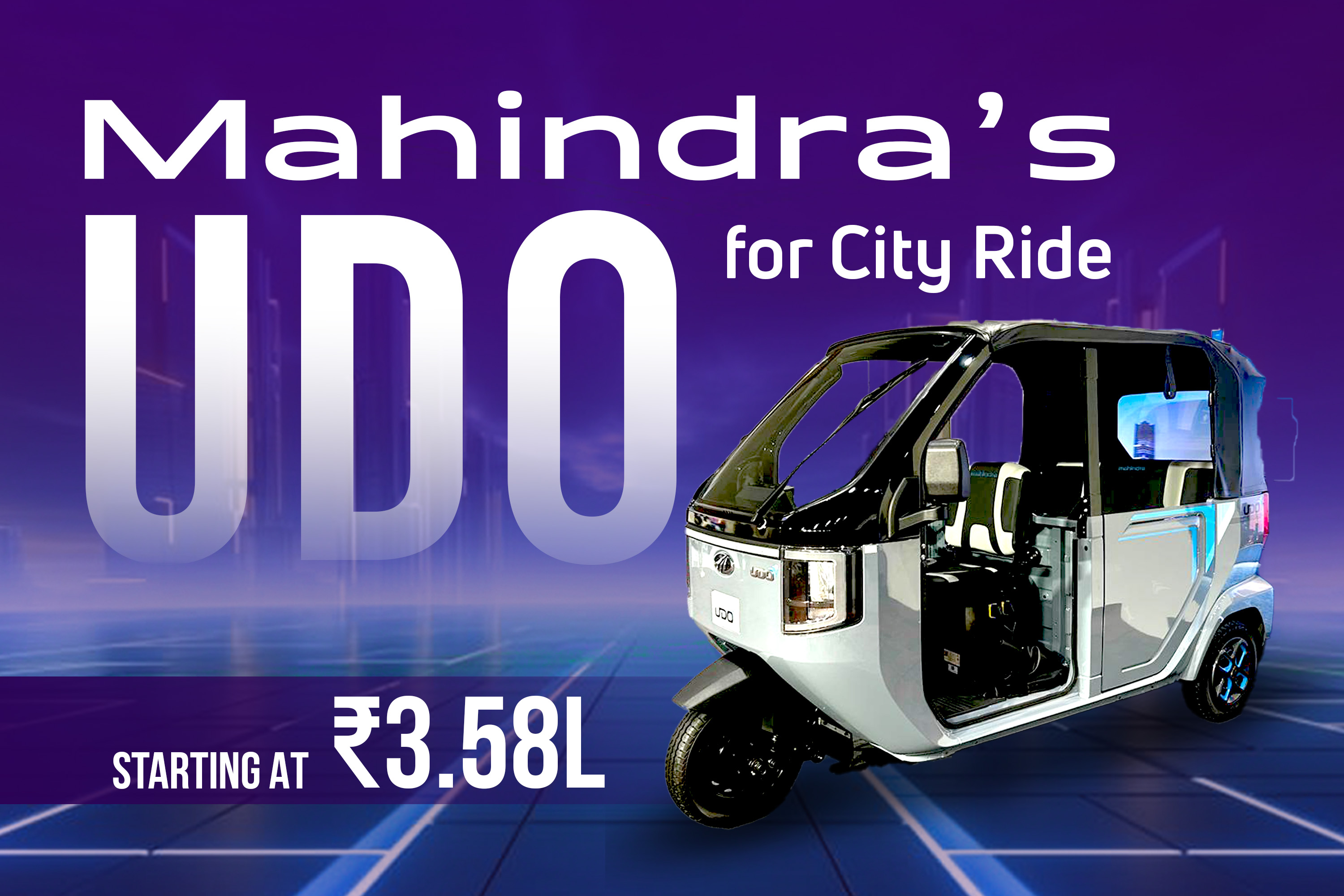
Mahindra LMML Unveils Udo: A New Electric Three-Wheeler Targeting City Commuters
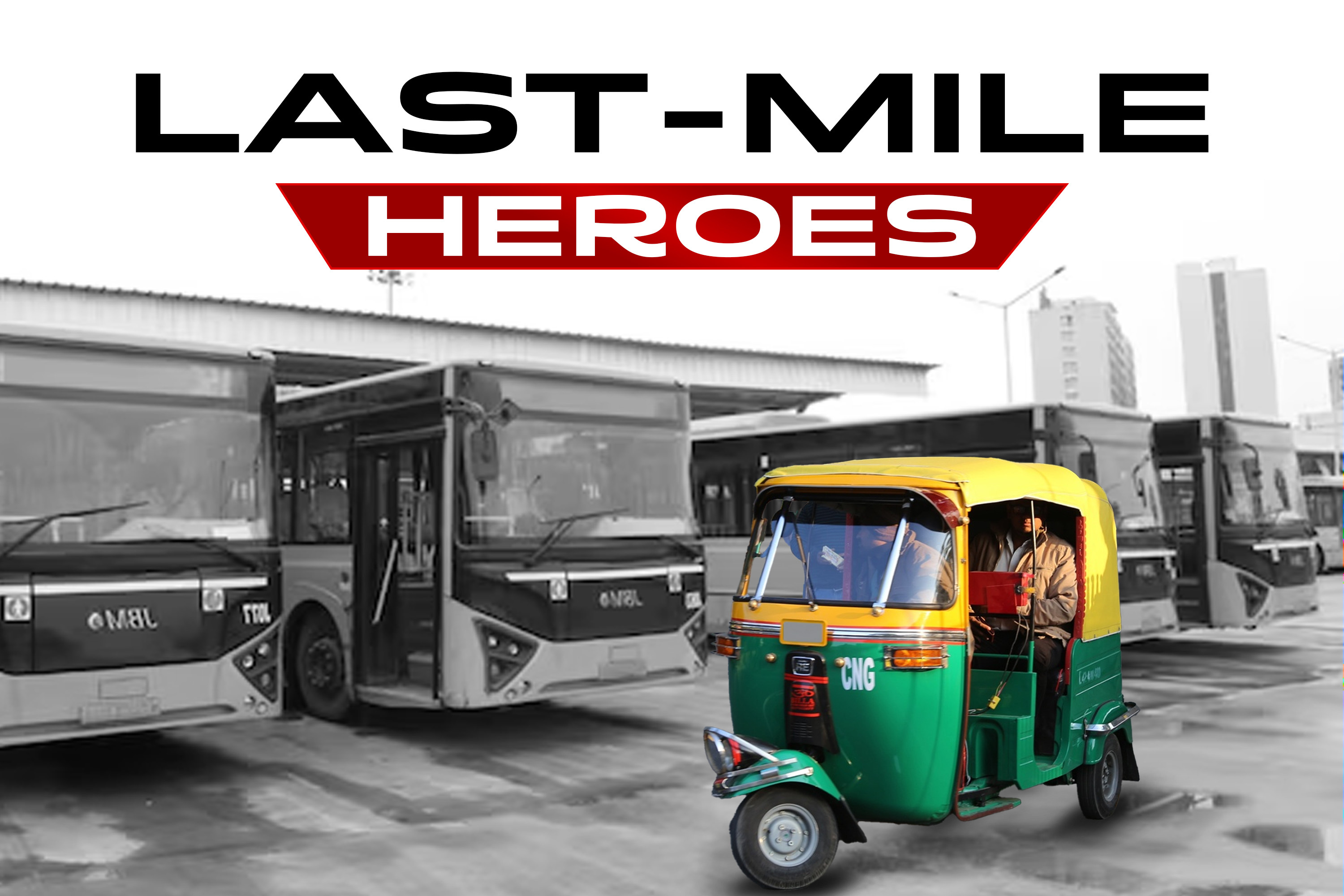
Bus Stops to Doorsteps: The Hidden Role of Three-Wheelers in Daily Commutes
CNG, LPG or Electric Three-Wheelers: Maintenance Differences Explained
Why EV Adoption Is Fastest in the Three-Wheeler Segment in India
Best Passenger Auto Rickshaw for City Use in India: Fuel Type & Models