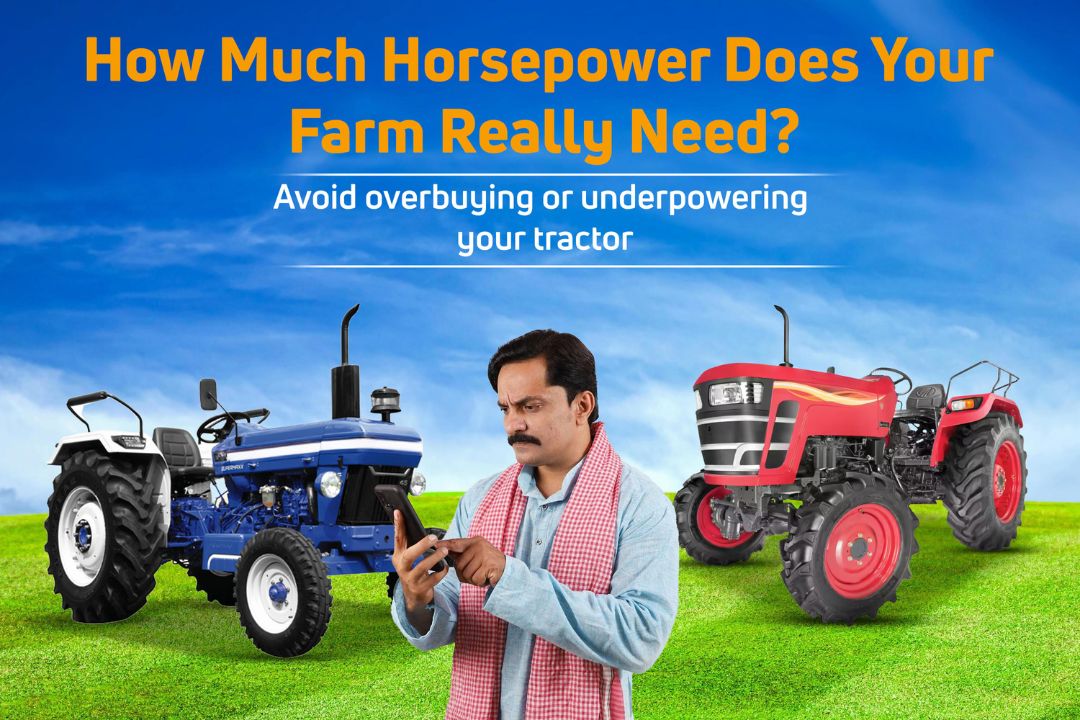

How to Choose the Right Tractor Horsepower for Your Farm Size
When farmers talk about buying a tractor, the discussion almost always comes down to one thing: horsepower. Someone says, “Take more HP, it will be useful later.” Someone else says, “Too much HP just wastes diesel.” Both are right—and wrong—depending on the farm.
The truth is, choosing the right tractor horsepower isn’t about future guessing or copying what your neighbour bought. It’s about matching the machine to the land you actually work on, every day
Horsepower Really Means in Daily Farm Work
Horsepower sounds technical, but on the field it’s simple. It decides how easily your tractor can pull, lift and run implements without struggling. If the tractor feels like it’s always working too hard, HP is probably low. If it feels heavy, fuel-hungry and underused, HP is probably too high.
There’s pulling power (used when dragging implements or trolleys) and PTO power (used when running machines like rotavators or seed drills). Both matter, but only if they match what you actually do on your farm.
Small Farms (1–5 Acres): Where Smaller Tractors Shine
For small farms, more power rarely means more profit. In fact, it often means higher costs.
Most farms under five acres are used for vegetables, orchards, or mixed crops. The work involves frequent turning, lighter implements, and shorter operating hours. For this kind of farming, tractors in the 15–35 HP range usually do the job comfortably.
These tractors are easier to handle, burn less diesel and don’t damage crops while moving around. They also cost less to maintain. Many farmers realise after a few years that a compact tractor they can fully use is better than a powerful one they never push properly.
Medium Farms (5–15 Acres): Don’t Go Too Small Either
Once farm size increases, workload changes. More land means longer hours, heavier implements, and tighter schedules during sowing and harvesting.
This is where 40–50 HP tractors fit well. They’re strong enough for proper ploughing, tilling and transport work, but still manageable in terms of fuel cost. For farmers handling multiple crops or seasons, this range gives flexibility without going overboard.
Many Indian farmers in this category prefer reliable mid-range tractors mainly because they balance power and running cost reasonably well.
Large Farms (15+ Acres): Power Has a Purpose Here
On large farms, time becomes more valuable than fuel savings. Deep ploughing, heavy implements and long working days demand tractors that don’t slow down under pressure.
Tractors above 60 HP are designed for this kind of work. They handle bigger tools and larger fields efficiently. Yes, they consume more fuel but when used properly, the output justifies the cost.
The key is honesty. If your land doesn’t demand this level of power, buying it “just in case” rarely pays off.
Land, Soil and Crops Change Everything
Two farms of the same size can need very different tractors. Sandy soil, hilly land or wet paddy fields often require more traction and stability than flat dry land. Orchards need tight turning. Paddy fields need grip. Dryland farming needs consistent pulling power.
This is why horsepower should never be decided by acreage alone. Soil and crop type quietly decide how much power you’ll actually use.
Fuel, Transmission and Comfort Also Matter
Higher HP usually means higher fuel use, but modern tractors manage this better than older ones. Transmission choice also affects efficiency, manual gearboxes give control, while smoother systems help during transport and variable work.
Comfort may not sound important on day one, but after years of use, good seating, visibility and easy controls make a real difference. A tired operator doesn’t work efficiently, no matter how powerful the tractor is.
Final Thoughts
Choosing the right tractor horsepower isn’t about buying the biggest machine you can afford. It’s about buying a tractor that feels right on your land, one that works without strain and without waste.
When HP matches your farm size, soil and work pattern, everything else falls into place. Fuel costs stay sensible. Work finishes on time. And the tractor earns its keep instead of becoming a burden.
MotorFloor takeaway: The best tractor isn’t the most powerful one in the village. It’s the one that works hardest for your farm, not against it.

MotorFloor
Articles: 33Related Posts
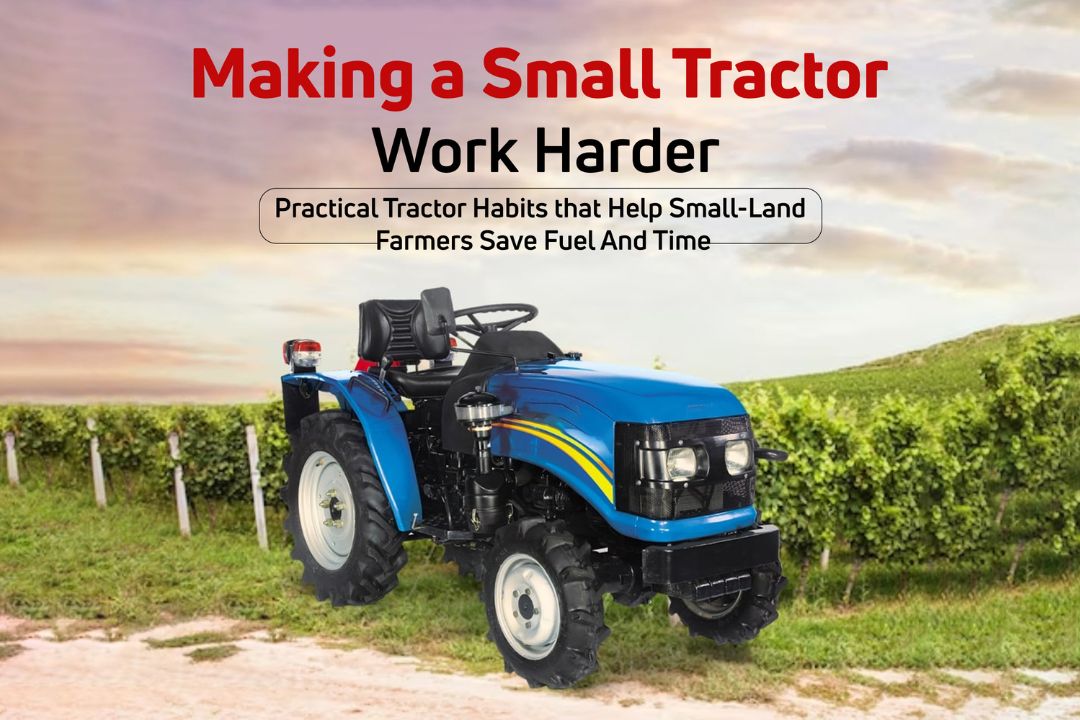
Best Tractor Practices for Small-Land Farmers in India
When Is the Right Time to Buy a Tractor: Astrology Secrets Revealed
Common Tractor Problems During Indian Summers & How to Prevent Them
How to Change a Tyre Puncture on a Tractor: A Step-by-Step Guide
Best Tractor Settings for Paddy, Sugarcane, Wheat & Cotton Farming