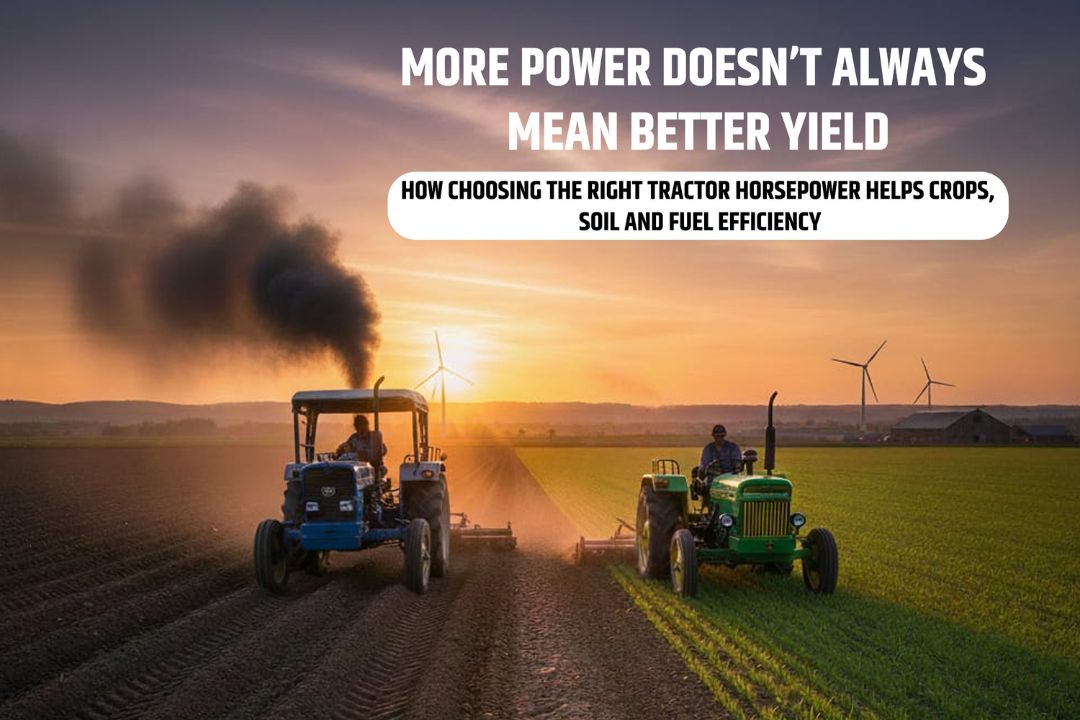

How Tractor Power Affects Yield: Matching HP to Your Crop Needs
When farmers talk about increasing yield, the conversation usually goes straight to seeds, fertilisers or irrigation. Tractor power rarely gets the same attention. But in reality, using the right horsepower for the right crop and operation can quietly make a big difference in timeliness, soil health and overall productivity.
More horsepower doesn’t automatically mean better yield. In many cases, it leads to wasted fuel, compacted soil and inefficient field operations. What matters is matching tractor power to what your crop actually needs.
How Much Horsepower Do You Really Need?
There’s no single number that works for every farm. Horsepower depends on tasks, soil and scale.
As a rough guide:
- 20–50 HP works well for light mowing, spraying, loader work and small holdings
- 50–100 HP suits medium ploughing, hauling, pasture work and regular cultivation
- 100 HP and above is needed for heavy tillage, large seeders and big operations
These ranges shift depending on soil type, terrain and how efficient your implements are. Heavy black soil or hard red soil always demands more usable power than sandy land.
Crops, Seasons and Power Demand
Every crop goes through different stages and each stage needs different tools.
Take wheat in the Rabi season. Deep tillage with a disc plough, followed by a seed-cum-fertiliser drill, demands steady PTO power and traction. Compare that to a summer vegetable crop, where lighter tillage and frequent spraying are more important than brute force.
Crop choice matters just as much as acreage. Rice, groundnut, cotton and vegetables all load the tractor differently, sometimes more through implements than engine size.
Soil and Terrain Change Everything
Soil type decides how much of your tractor’s power actually reaches the ground.
- Clay or black soil needs stronger implements and higher torque
- Sandy soil requires lighter tools to avoid overworking the land
- Hilly terrain needs compact tractors with good balance and traction
In regions like Vidarbha or parts of Karnataka, farmers often use rotavators with curved blades specifically designed for hard soil, ensuring available horsepower is used efficiently instead of being wasted in wheel slip.
Implements Often Decide HP, Not the Tractor
Many farmers choose tractors first and think about implements later. That’s backwards.
Each implement has its own power requirement:
- Rotary cutters: 20–35 HP
- Tillers and cultivators: 30–50 HP
- Loaders: 35–60 HP, depending on size
- Backhoes: 40–70 HP
Before buying a tractor, list your implements and check their PTO or drawbar needs. A small buffer is useful but oversizing too much usually hurts efficiency.
Using Horsepower Efficiently on the Field
Good power management improves yield indirectly:
- Maintain correct tyre pressure and proper ballast
- Keep air filters clean and engines well-tuned
- Operate in the correct RPM range, avoid lugging or over-revving
- Plan field operations to reduce repeated passes
These small things reduce power loss and ensure implements work evenly, which improves crop establishment and soil condition.
Choosing the Right Tractor Category
For small and marginal farmers, mini and compact tractors often deliver the best balance of power and efficiency. Brands like Captain Tractors focus heavily on this segment, offering machines from 12 HP to 28 HP that suit gardens, orchards and farms up to 10 acres.
These tractors are easier on soil, fuel-efficient and versatile enough to handle multiple crops across seasons.
Final Thoughts
Tractor horsepower doesn’t directly grow crops but using the right power at the right time helps crops grow better. When implements work smoothly, soil stays healthy and operations finish on time, yield benefits follow naturally.
MotorFloor takeaway: Don’t chase horsepower numbers. Match tractor power to your crops, soil and implements and let efficiency do the rest.

MotorFloor
Articles: 33Related Posts
Best Tractor Practices for Small-Land Farmers in India
When Is the Right Time to Buy a Tractor: Astrology Secrets Revealed
Common Tractor Problems During Indian Summers & How to Prevent Them
How to Change a Tyre Puncture on a Tractor: A Step-by-Step Guide
Best Tractor Settings for Paddy, Sugarcane, Wheat & Cotton Farming